Training calm, focused brains for a high-speed world
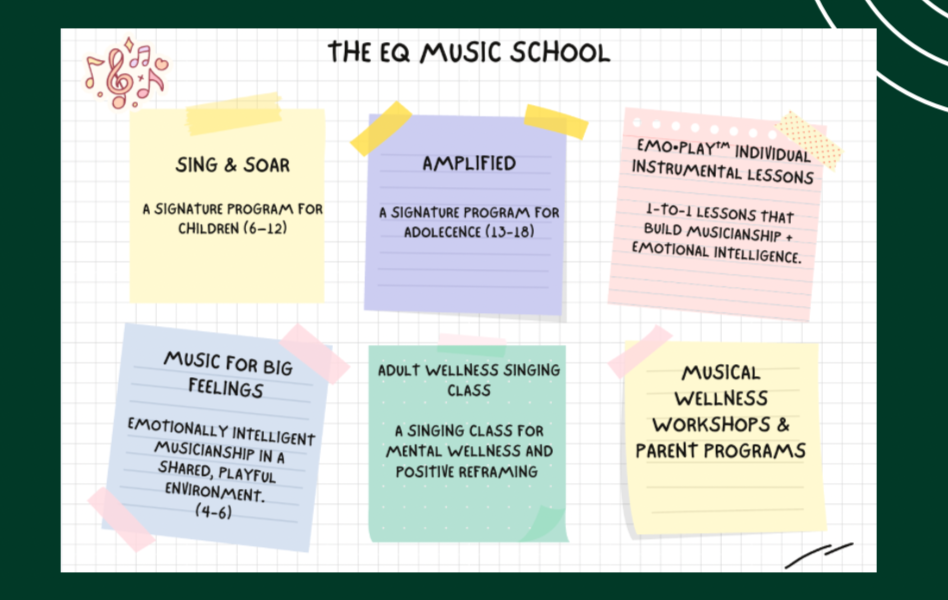
Sing & Soar | Amplify
Neuroscience-based emotional intelligence education.
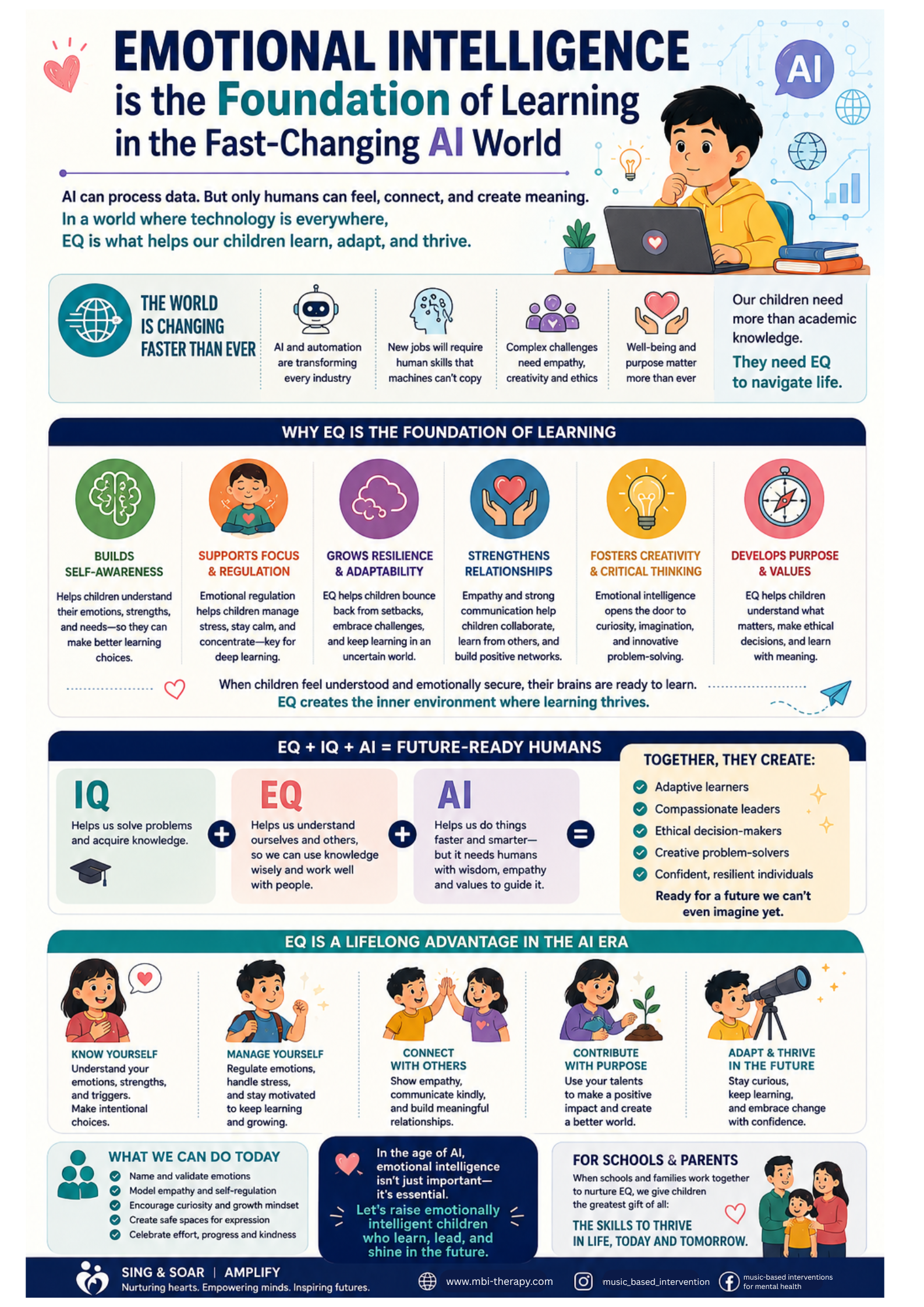
Most enrichment adds skills. Few strengthen the brain that uses them.
EQ is the operating system of learning
Our program uses neuroscience-informed methods to:
Activate the calming nervous system through music
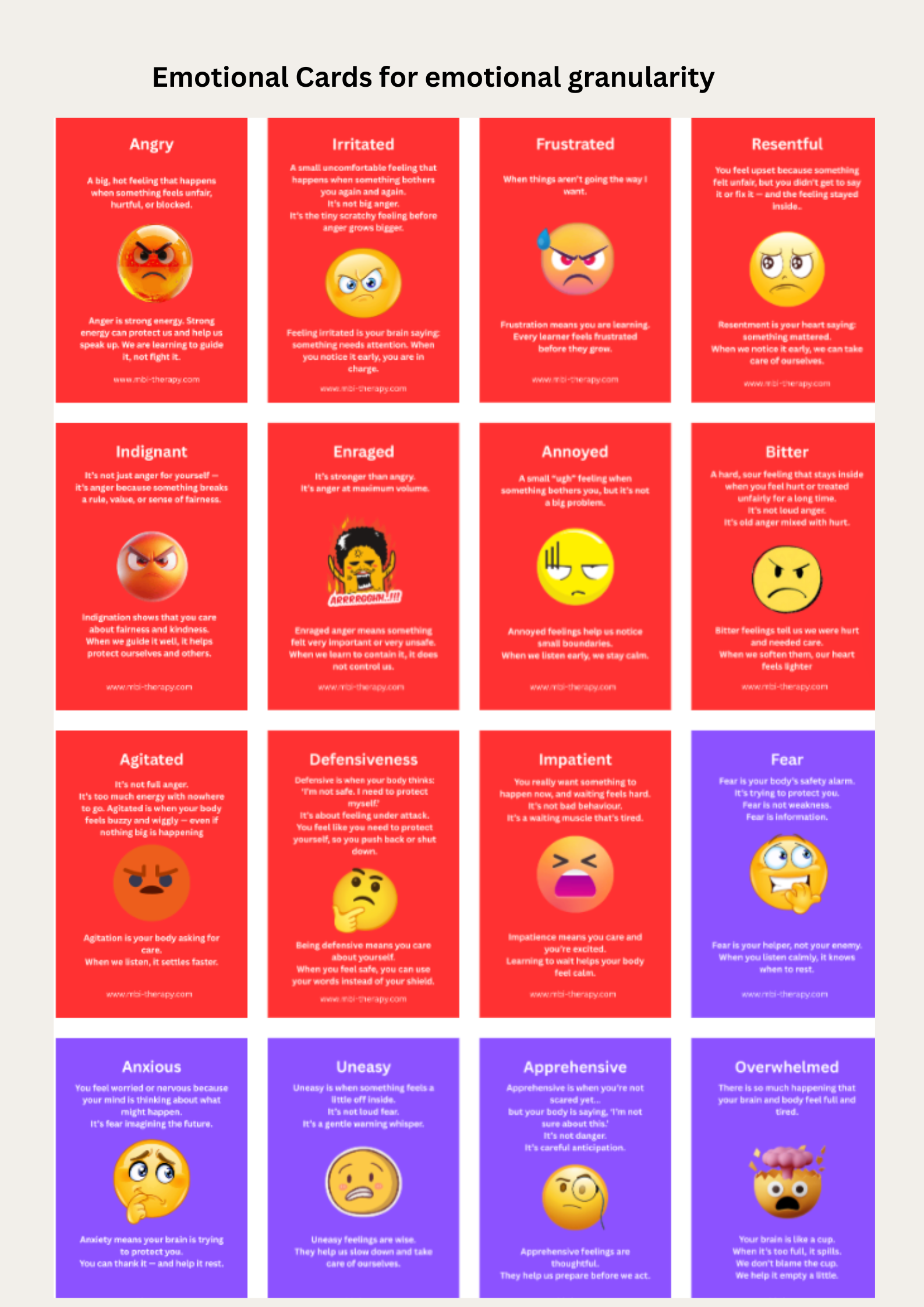
Teach children to recognize emotions early
Strengthen pause-and-reflect skills
Build resilience under pressure
What We’ll Explore
Each Sing & Soar and AMPLIFY session combines music, movement, reflection, and evidence-informed emotional learning to help children and young people better understand themselves, regulate their emotions, connect with others, and grow with confidence.
Core Themes
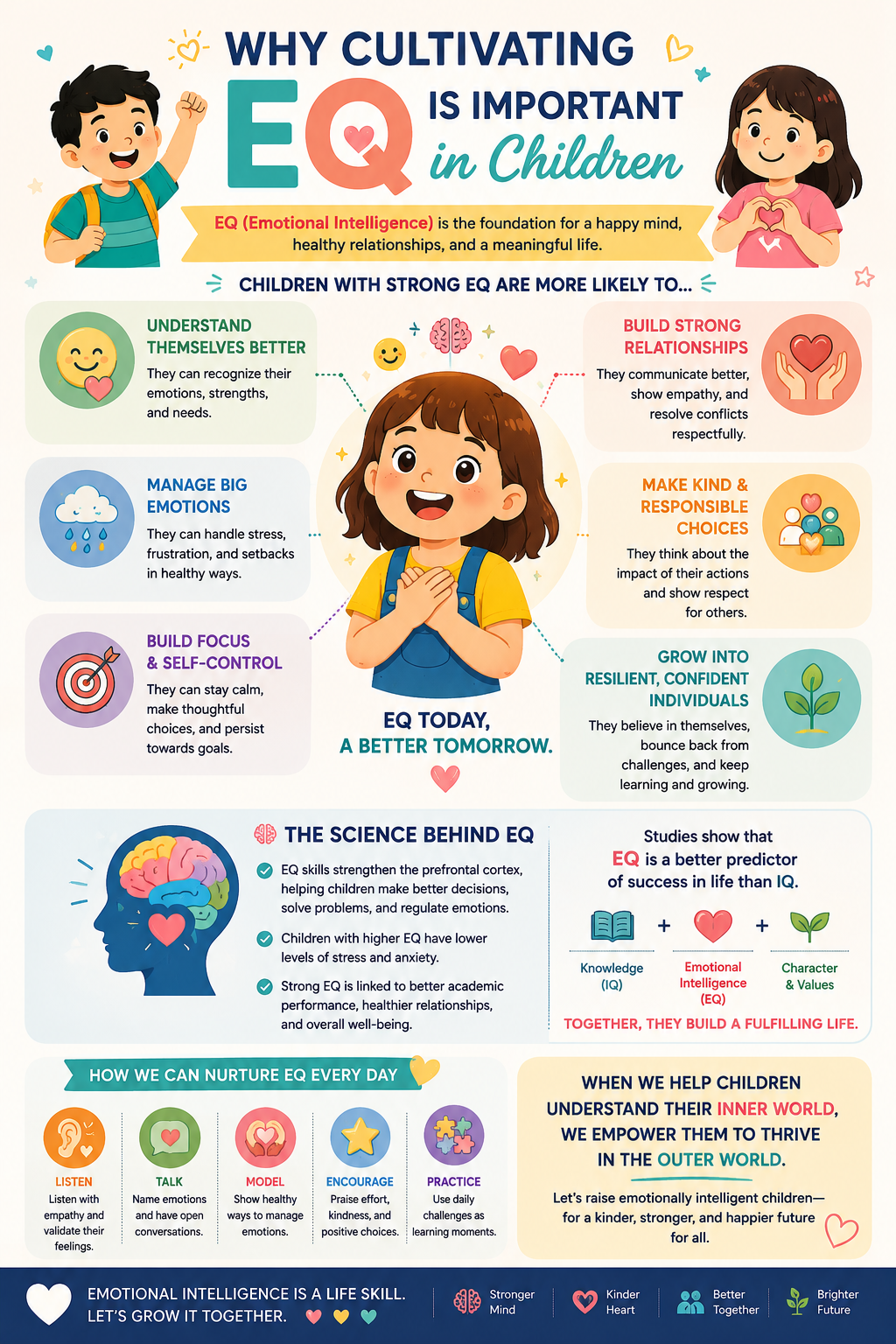
Participants are guided through age-appropriate themes that support emotional intelligence, resilience, identity, relationships, and future readiness. These include:
Self-awareness
Emotional regulation
Thought awareness and reframing
Self-compassion
Values and identity
Empathy and healthy boundaries
Resilience and growth mindset
Hope, purpose, and future visioning
Singing and Vocal Expression
Singing provides a joyful and accessible way for participants to express emotions, build confidence, and connect with others. Through group songs, vocal play, songwriting, and simple musical activities, participants learn to use their voices as tools for self-expression, connection, and emotional well-being.
No previous singing experience is required.
Breathwork
Gentle, age-appropriate breathing practices help participants slow down, settle the nervous system, and become more aware of what is happening in their bodies. These techniques can be used during moments of stress, anxiety, frustration, or overwhelm.
Somatic Movement
Somatic movement helps participants notice and release emotions held in the body. Through stretching, rhythm, grounding, movement games, and mindful body awareness, they learn how emotions can be felt physically and how movement can support regulation, energy, and confidence.
Psychoeducation
Complex emotional and psychological ideas are introduced in simple, relatable ways through stories, metaphors, discussions, and practical examples. Participants learn how emotions, thoughts, body sensations, behaviours, and relationships are connected.
The aim is not only to tell participants what to do, but to help them understand why they feel and respond the way they do.
Journaling and Creative Reflection
Guided journaling gives participants a quiet space to process their experiences and express what may be difficult to say aloud. Depending on age, activities may include writing, drawing, colouring, goal setting, emotion mapping, and creative reflection.
Journaling helps participants recognise patterns, celebrate progress, identify strengths, and build a deeper relationship with themselves.
A Whole-Person Learning Experience
By combining singing, breathwork, somatic movement, psychoeducation, and journaling, each session engages the mind, body, emotions, and imagination.
Participants do not simply learn about emotional well-being—they experience and practise it in ways they can carry into school, home, friendships, and everyday life.
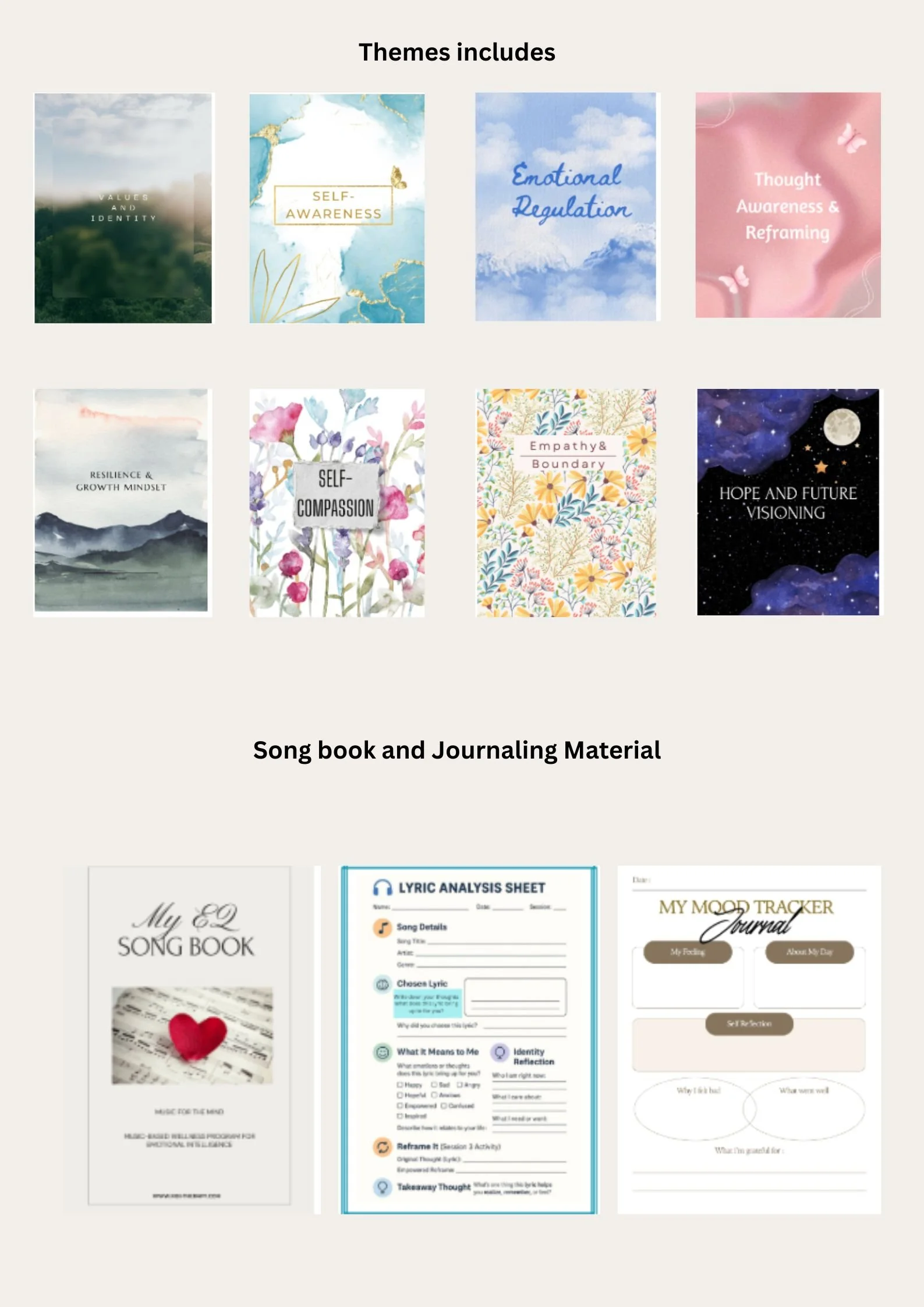
Help your child build calm, confidence, and resilience.